The Logic of Starting Over
A personal framework for escaping cognitive biases, seeing past prestige, and making difficult life choices with clarity.

"Your mind evolved to keep you safe inside a tribe. If you let it run unexamined, fear and other people's expectations will make your decisions for you."
I spent seven years in biomedical science, five years at university and two years working in the field. By the end of those seven years, I knew I was in the wrong place.
The thought of doing that work for the rest of my life made no sense to me. I wanted to move abroad, do a master's degree, and start fresh. But every time I sat down to actually plan the move, I froze.
I told myself that if I left, I would burn through all my savings, fail my courses, embarrass myself in front of my family, and end up stranded in a foreign country with nothing to show for it.
Most of us stay in jobs or routines we dislike for the same reason. We tell ourselves we are being practical, when really we are just terrified of what happens if we change course.
A few years later, after I did make that move, I spent time working at a massive company abroad. In my head, being at a famous, prestigious company was the ultimate destination. When I actually worked there, I realized my mental image of prestige had almost nothing to do with day-to-day reality. The experience was valuable, and I saw how things worked at a scale I had never seen before. But I also discovered that I was completely unsuited for corporate life.
Turning down the offer to stay there let me build projects I could never have touched from inside a corporate office. It also turned my life into an ongoing exploration that I want to continue for the rest of my days.
Getting to that point took time. The turning point was learning to spot the logical flaws in my own panic.
Watching your thoughts without believing them
The first step was changing how I listened to my own mind.
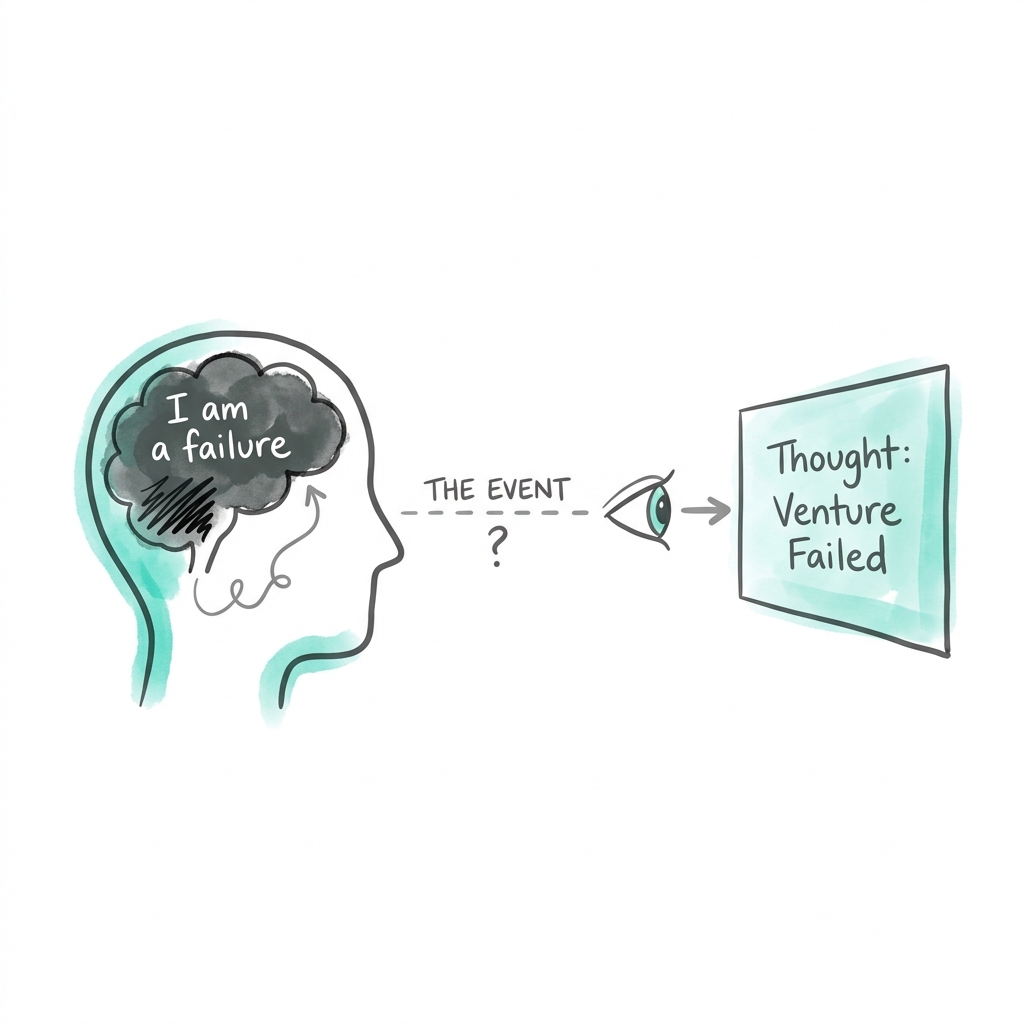
For years, whatever thought crossed my head felt like the truth about who I was. If a project ran into an obstacle, I thought, "I am incompetent." If someone questioned my work, my stomach dropped and I rushed to defend myself, because I treated their feedback as an attack on my character.
Psychologists call this identity fusion. Our minds evolved in small tribes where social rejection meant abandonment, so the brain treats any potential failure as a threat to survival. When you think "I am a failure," your brain is just anticipating rejection.
I started handling anxious thoughts differently. When panic crept in, I trained myself to acknowledge it directly, saying, "I am feeling anxious because the situation is uncertain."
That change sounds small, but it breaks the panic cycle. You stop feeling like your thoughts define you, and you can look at the problem in front of you.
Describing a situation without dramatic words
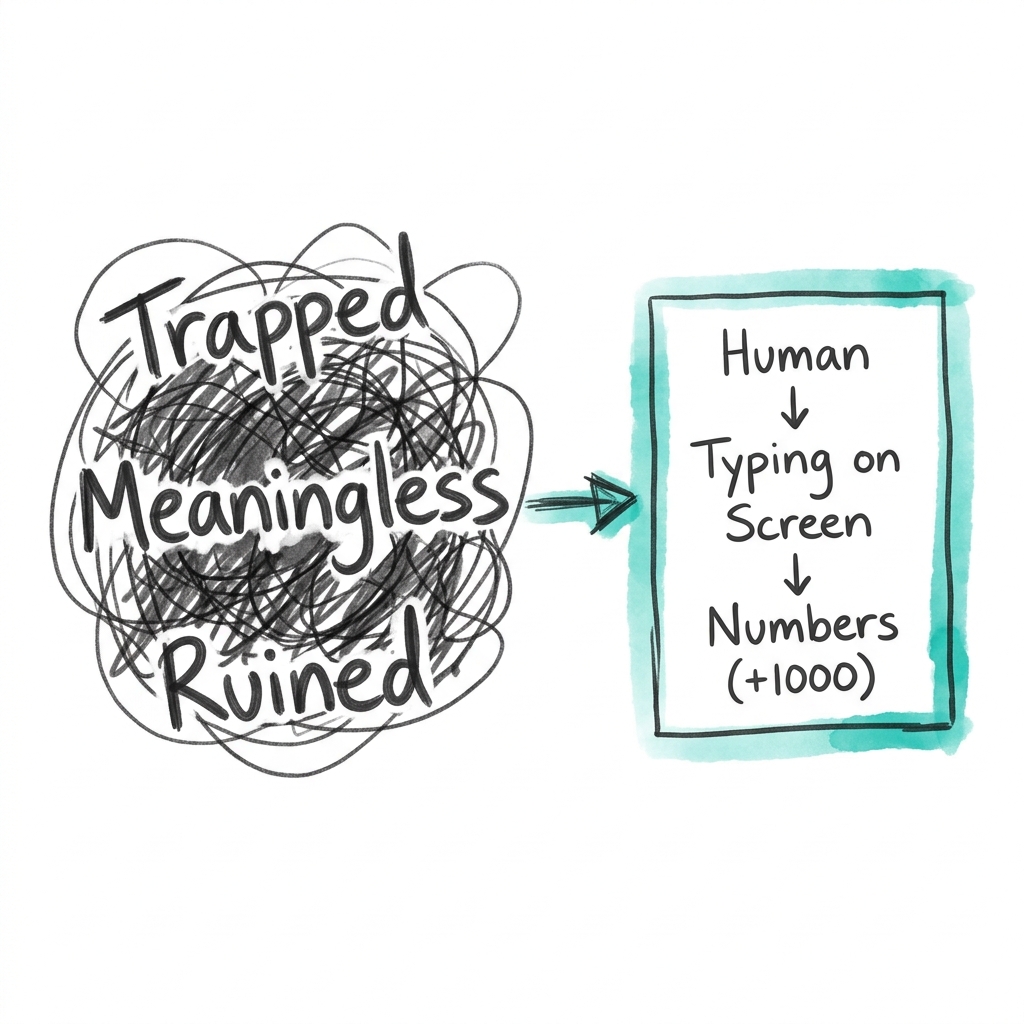
Once you separate yourself from the immediate panic, you can look at the plain facts without the dramatic vocabulary.
When people hate their work, they often use loaded descriptions, telling themselves they are trapped in a dead-end job and their career is over.
If you strip out the emotional words and look at physical reality, the situation is much simpler. You spend eight hours a day in a room typing at a computer to earn a paycheck, and you return tomorrow because you need money for rent and food.
Looked at plainly, you are trading your time for financial stability. That is the entire transaction.
There is no invisible cage. Once you drop the dramatic language, you can ask what other trades are available to you, and which ones you are willing to test.
Spotting personal attacks and distortions
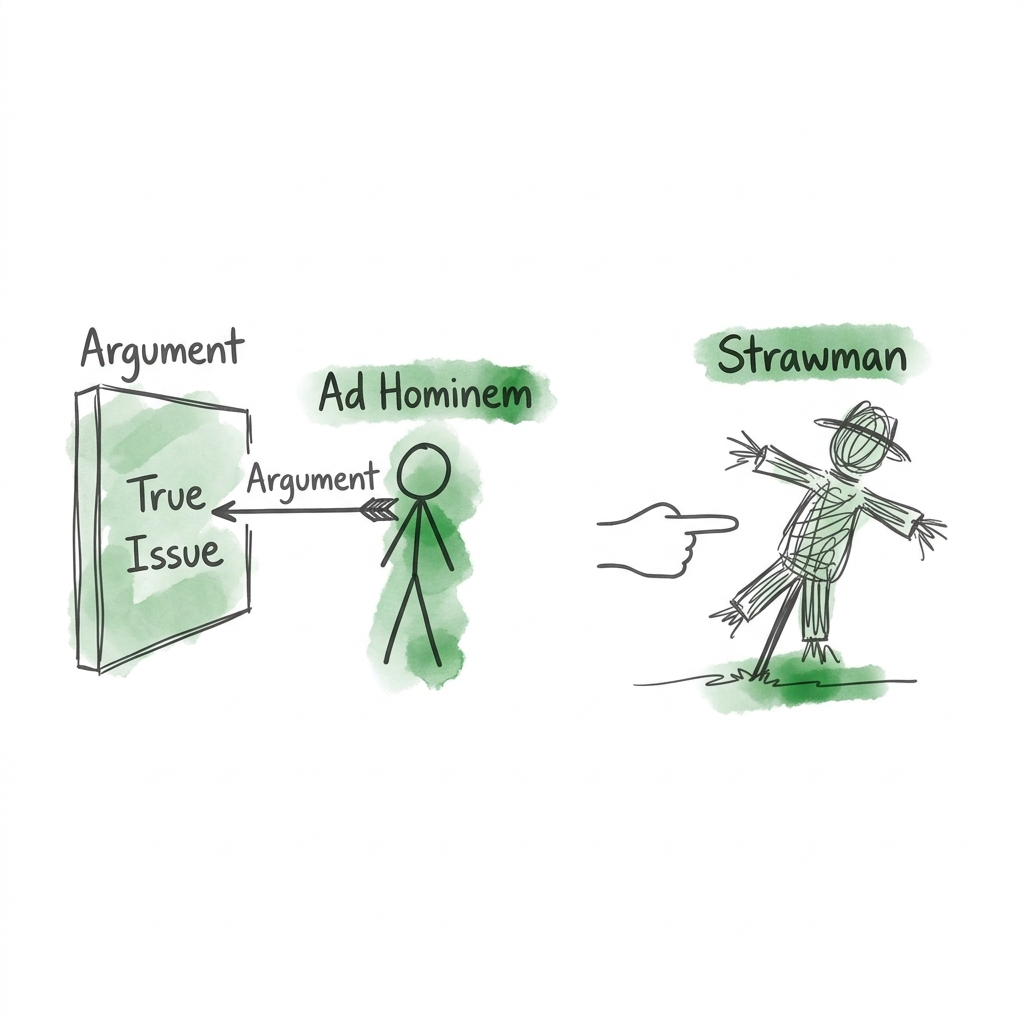
When you consider leaving a predictable path, people will question your judgment, and often they will argue poorly. Two common fallacies explain most of these encounters.
The first is the ad hominem attack. Someone skips discussing whether your plan makes sense and targets your motives, calling you impulsive or undisciplined.
In the past, my reaction was immediate defensiveness. My jaw clenched, and I would spend hours drafting imaginary speeches in my head to prove I was responsible and had good intentions.
Recognizing an ad hominem attack changes your reaction. You see that the other person stopped discussing the merits of the decision and started targeting your character instead. Once you notice that shift, you realize there is nothing to defend. The conversation about the actual choice is already over.
The second pattern is the strawman argument. This happens when someone takes your reasoning, exaggerates it into an extreme caricature, and then attacks that caricature.
For instance, when you explain that you are leaving a stable role because it does not fit your goals, someone might ask if you think you are too good for an honest job and everyone else is wasting their lives. They are no longer responding to what you said; they are arguing with an exaggerated version of your choice.
Naming these patterns takes the sting out of them. When someone distorts your reasons, you do not need to scramble to justify yourself. You just restate your point calmly, or drop the discussion entirely.
Slippery slopes and worst-case outcomes
When I was planning my move abroad, two specific fallacies kept me stuck for months.
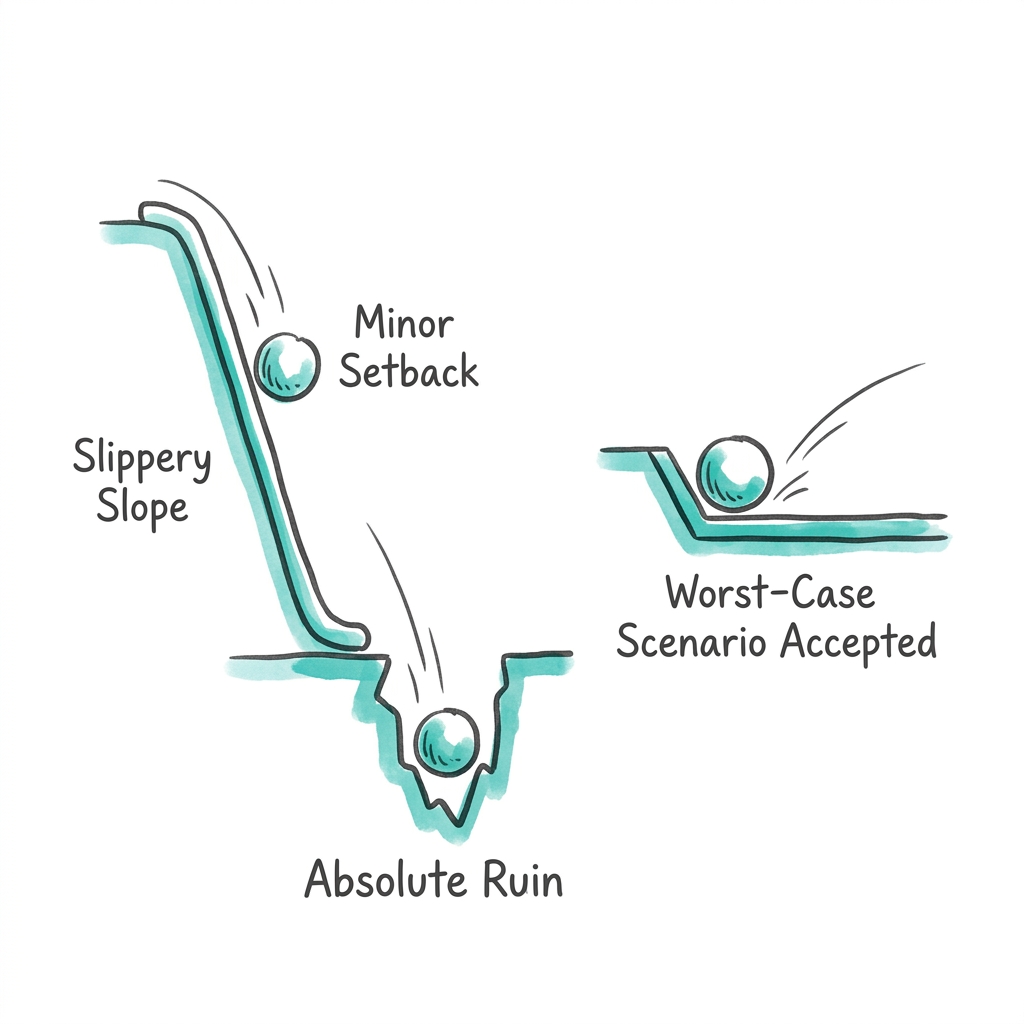
The first was the slippery slope, taking one uncertain decision and imagining a slide into total ruin. My brain told me that moving to a new country would lead to failing my classes, running out of money, losing my professional credibility, and returning home broken.
The second was the false dichotomy, reducing a nuanced decision to two extreme choices. In my head, I had two options. Either I would move abroad and become a massive success, or I would fail completely and ruin my life.
I broke that panic by mapping out the realistic worst-case scenario.
I asked myself what would actually happen if every single worry came true.
The answer was simple. I would fail the program, spend my savings, take a flight back home, sleep on a family couch, and look for an entry-level job. It would be frustrating. It would hurt my pride. But I would still be alive, healthy, and capable of working.
Once I looked at that worst-case outcome and realized I could easily survive it, the panic lost its power. The decision was no longer a life-or-death gamble; it was just a calculated risk with a manageable downside.
Dropping the expectation of fairness
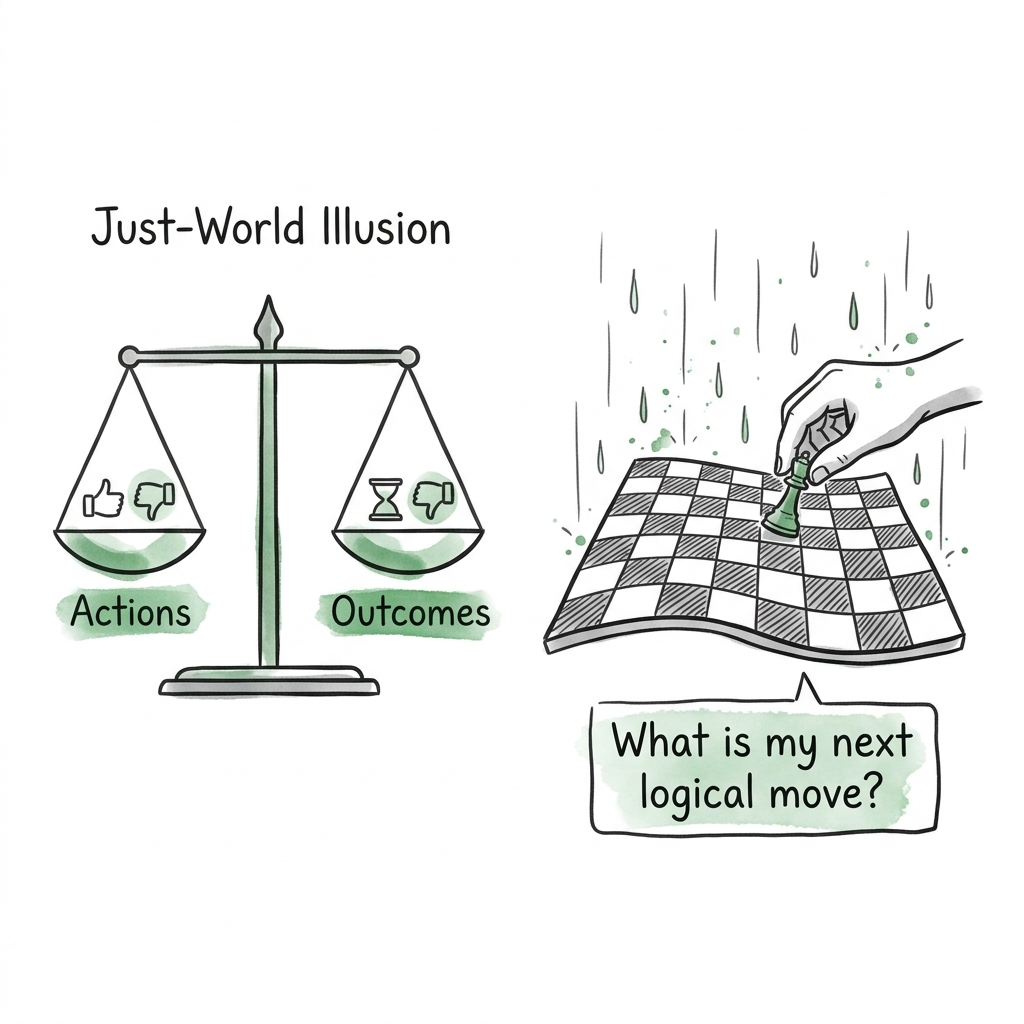
A surprising amount of chronic frustration comes from an unexamined belief that the world operates on fairness.
When someone who cuts corners gets promoted ahead of you, or when a project you poured months of honest work into falls apart, the automatic reaction is resentment, feeling that life is unfair and shouldn't work this way.
Philosophers call this the just-world fallacy, the belief that good effort and honest intentions always lead to equal rewards.
They do not. Outside factors constantly alter outcomes. Companies restructure, hiring managers have biases, industries decline, and bad luck happens to good people. Expecting life to treat you fairly because you tried hard is like expecting the rain to avoid you because you are a kind person.
Accepting that outcomes are messy does not mean becoming cynical. It simply removes the bitter shock when things go sideways.
The practical move is to stop replaying why something was unfair, and ask what the most sensible next step is given where things stand right now.
Sunk costs and the forty-year trade
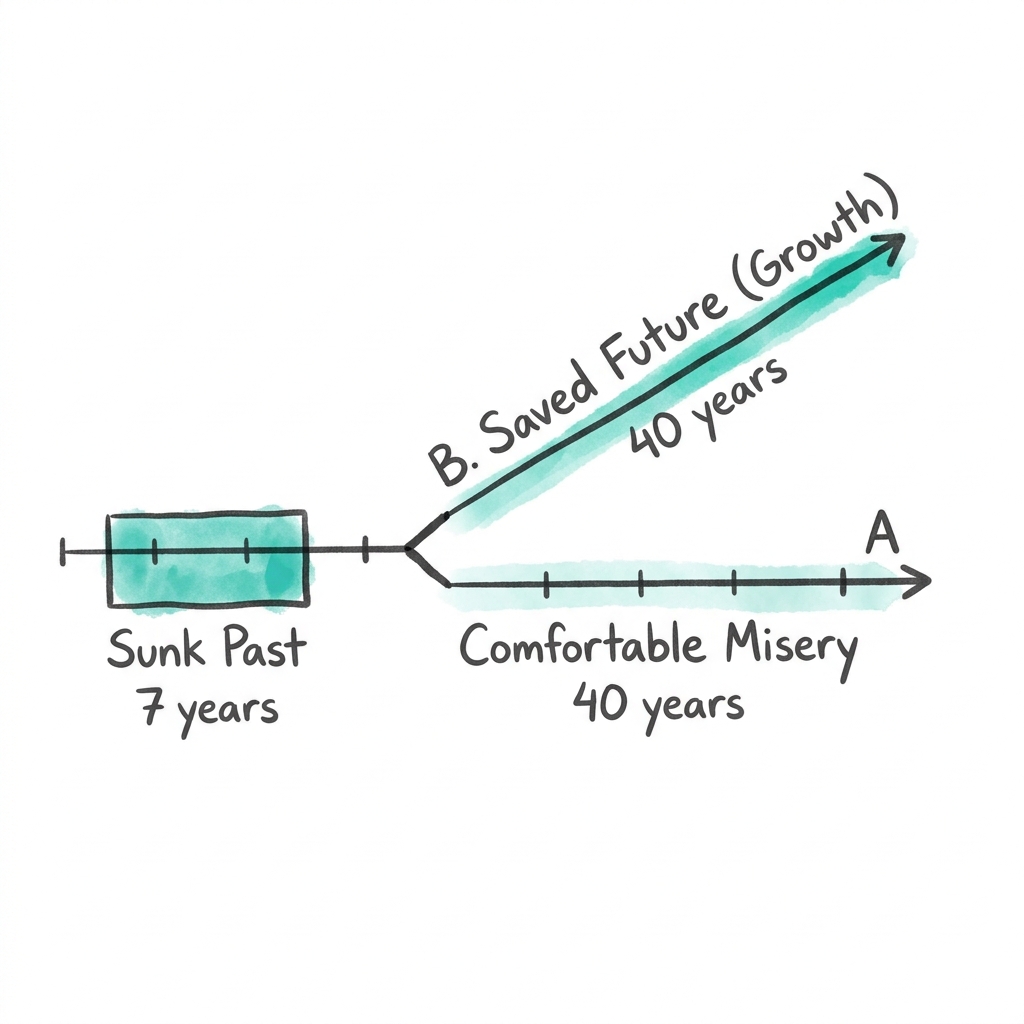
Walking away from a path you invested years into triggers the sunk cost fallacy.
This is the urge to stick with an unfulfilling choice simply because you already spent time, effort, or money on it.
When I decided to leave biomedical science after seven years, friends and colleagues were skeptical. They asked how I could throw away five years of university and two years in the industry just to move abroad and start over.
The arithmetic in my head was straightforward. Those seven years were gone no matter what I did. Staying in a career that felt wrong would never bring those years back. It would only forfeit the next forty.
Once you realize that past time is completely unrecoverable, the dilemma clears up. You stop trying to justify what you already spent and focus entirely on how you want to spend the decades ahead.
The illusion of corporate prestige
After I moved abroad and finished my master's degree, I had the chance to work at a massive company. It was a giant in the industry, the kind of brand name that looks impressive on a resume and makes other people nod in approval.
Before I got there, I had built up an elaborate fantasy in my head about what working for a prestigious company would be like.
When I actually worked there, I saw that the mental image I had created had almost nothing to do with day-to-day reality.
The experience was undeniably valuable. I worked on projects and handled responsibilities at a scale I had never encountered in my life. But living inside that corporate machine taught me that I was simply not suited for that type of job.
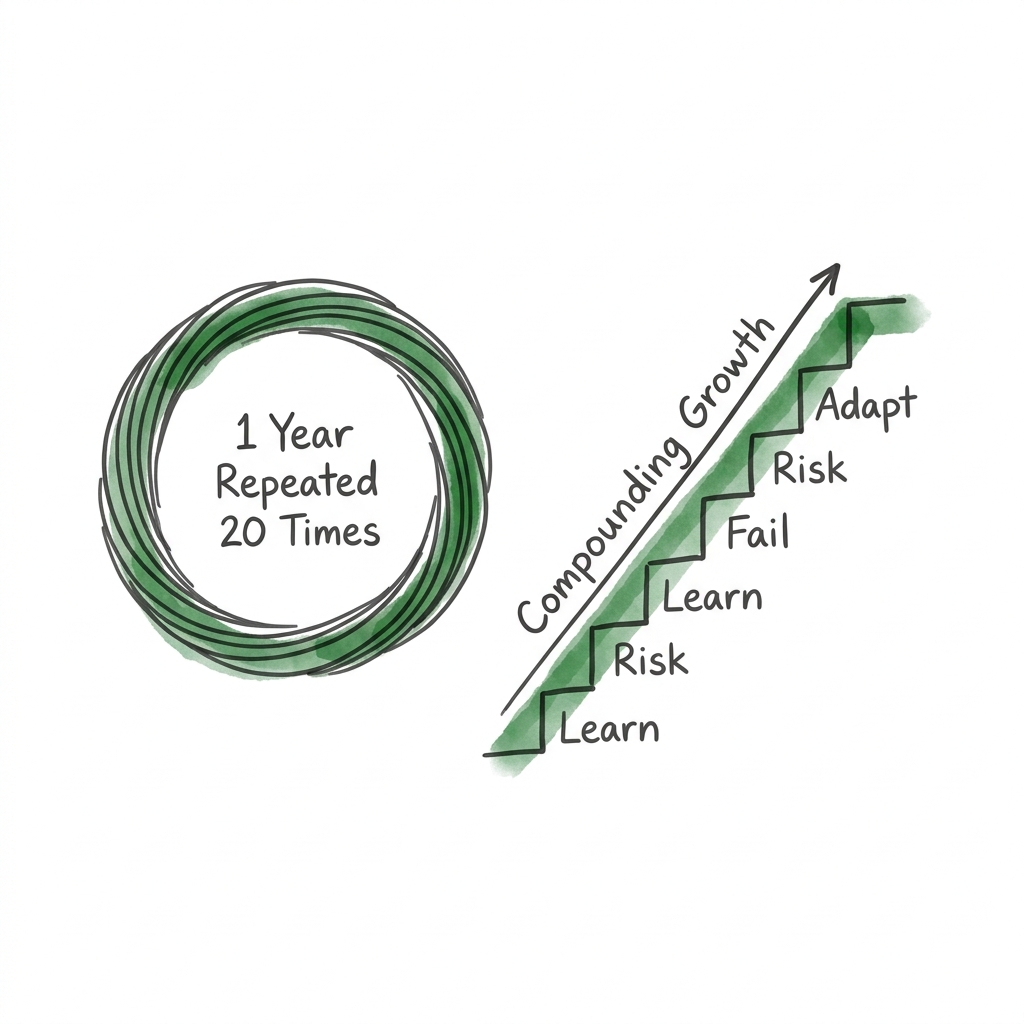
Society trains us to defer to prestigious titles and linear ladders. We assume that if a company is large and famous, committing your career to it must be worthwhile. But as author Richie Norton pointed out, some people say they have twenty years of experience when they really just have one year of experience repeated twenty times.
Turning down the job offer to stay on that track was not easy, but accepting a role just because the brand name looks impressive is an expensive form of self-deception.
Walking away allowed me to build things I could never have achieved from inside its corporate walls. It also shifted how I view my entire life. I stopped looking for a permanent, safe box to sit in, and started treating work as an ongoing exploration, one that I want to keep pursuing for as long as I live.
Building a reliable circle of support
Walking away from conventional tracks carries an emotional cost.
When you leave a predictable path, people around you often feel uneasy. Even well-meaning family members will encourage you to take the safer route because they worry about you.
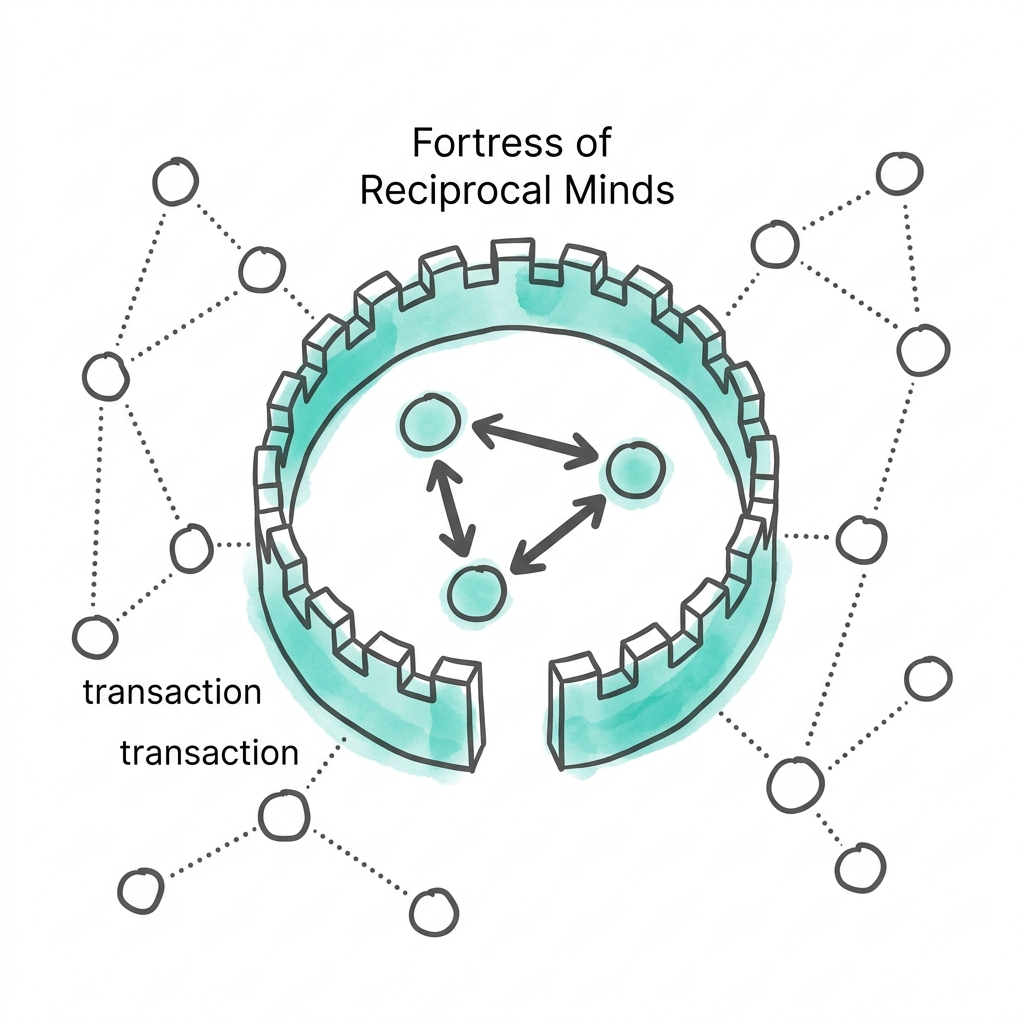
During major transitions, relying entirely on willpower is a mistake. You need people in your corner who understand what you are doing.
Over time, I learned to distinguish between casual acquaintances you grab a drink with when life is easy, and a small circle of dependable friends who show up when things get messy. Having even two or three people who share your values and respect your decisions provides an anchor. It makes taking calculated risks far easier when the ground beneath you feels unsteady.
Giving decisions time to work
The final piece is giving your choices enough room to breathe.
We live in an environment that expects instant validation. When you change careers, move abroad, or launch a project, there is an urge to evaluate whether you made the right call every single week.
Real progress rarely works on that schedule. Meaningful changes compound gradually over years.
Once you have examined your fears, accepted the worst-case scenario, and committed to a direction, your only job is to show up and do the work each day. You have to give the decision enough runway to actually bear fruit.
A simple sanity check
Clear thinking will not eliminate uncertainty. Difficult decisions will still feel uncomfortable, and starting over will always demand effort.
What logic does is remove the imaginary disasters that keep you paralyzed.
The next time you feel a surge of anxiety, anger, or hesitation about a choice, pause and ask yourself three questions.
- Is this thought a physical fact, or an emotional prediction about the future?
- Am I running an imaginary slippery slope, or looking at the realistic worst-case scenario?
- Does staying on this path make sense for the next ten years, or am I just trying to defend past investments and please other people?
When you take away the catastrophic vocabulary, the fear of what others think, and the illusion of prestige, decisions become much simpler.
You see the situation for what it actually is, accept the manageable risks, and take the next sensible step.